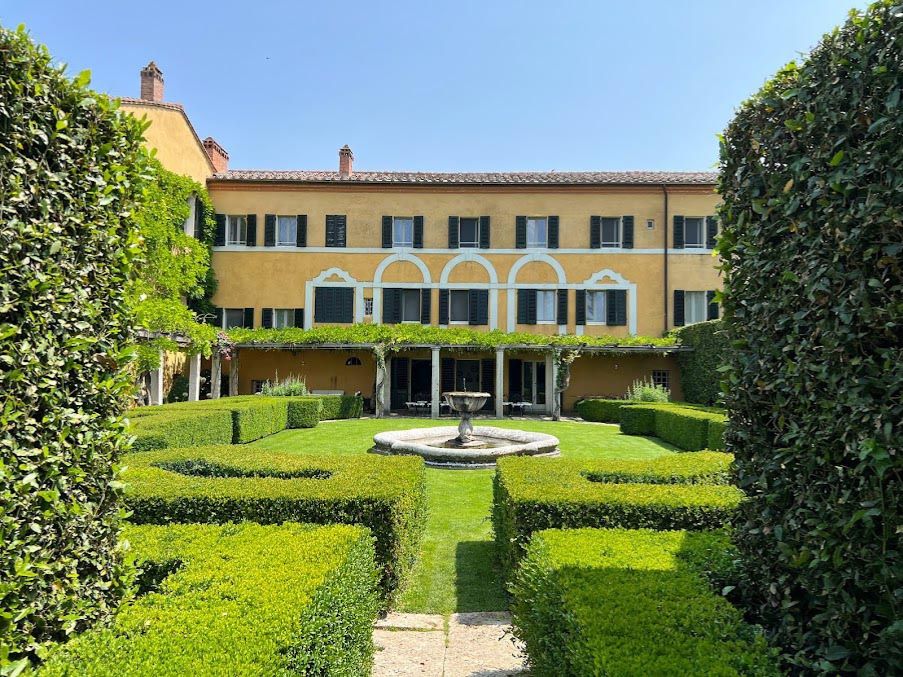
Villa La Foce is a rare fusion of Tuscan tradition and classical elegance, where architecture and garden design blend seamlessly into the landscape of the Val d’Orcia.
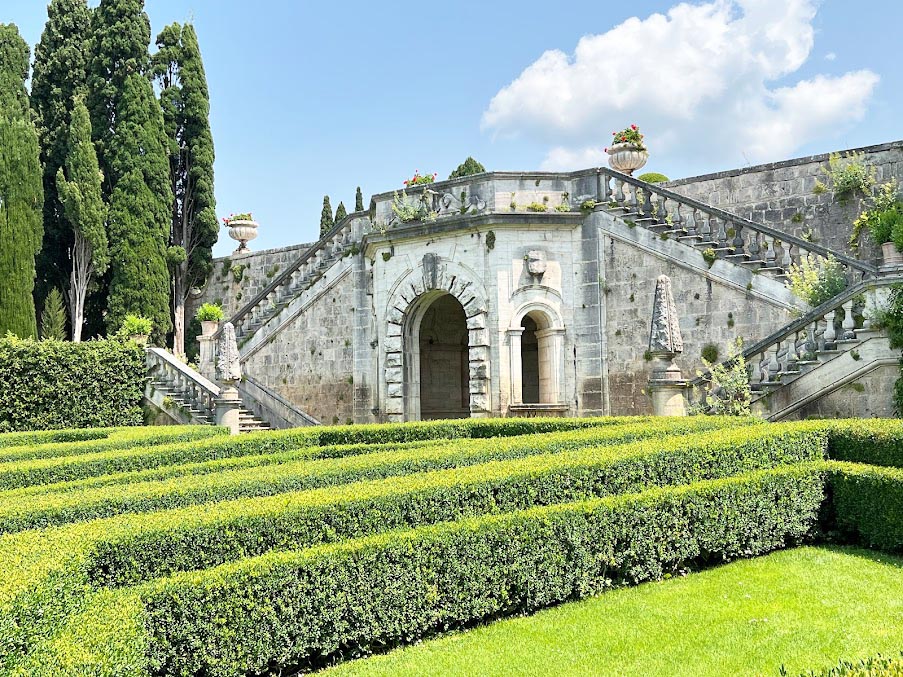
Villa La Foce: Cecil Pinsent’s Dialogue of Order and Landscape
Villa La Foce, nestled in the rolling hills of the Val d’Orcia, stands as one of the most compelling achievements of early 20th-century garden design — the work of English architect and landscape designer Cecil Ross Pinsent, whose refined classical language shaped some of the most celebrated villas and gardens in Tuscany.
To an English person, it will seem like simplified English, as a skeptical Cambridge friend of mine told me what Occidental is. The European languages are members of the same family. Their separate existence is a myth. For science, music, sport, etc, Europe uses the same vocabulary. The languages only differ in their grammar, their pronunciation and their most common words.
Born in Uruguay and trained as an architect in Britain, Pinsent arrived in Florence in the early 1900s, where he became immersed in the artistic and intellectual circles of the Anglo-Tuscan community. Influenced by Renaissance principles and a deep reverence for proportion, he developed a distinctive approach to landscape design — one that blended the formal rigor of Italian garden traditions with a modern sensibility for space, movement, and visual rhythm.
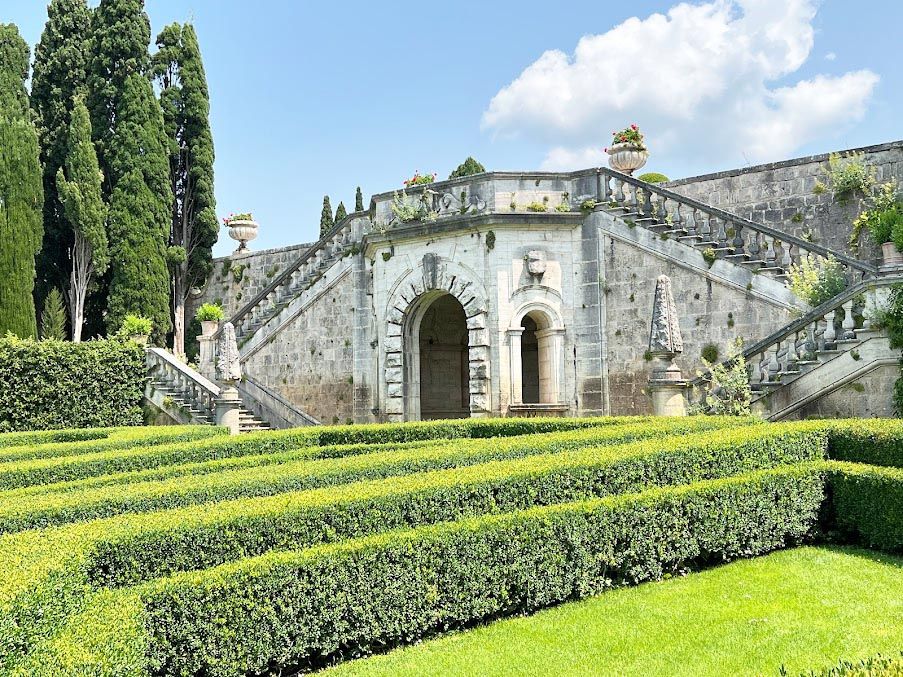
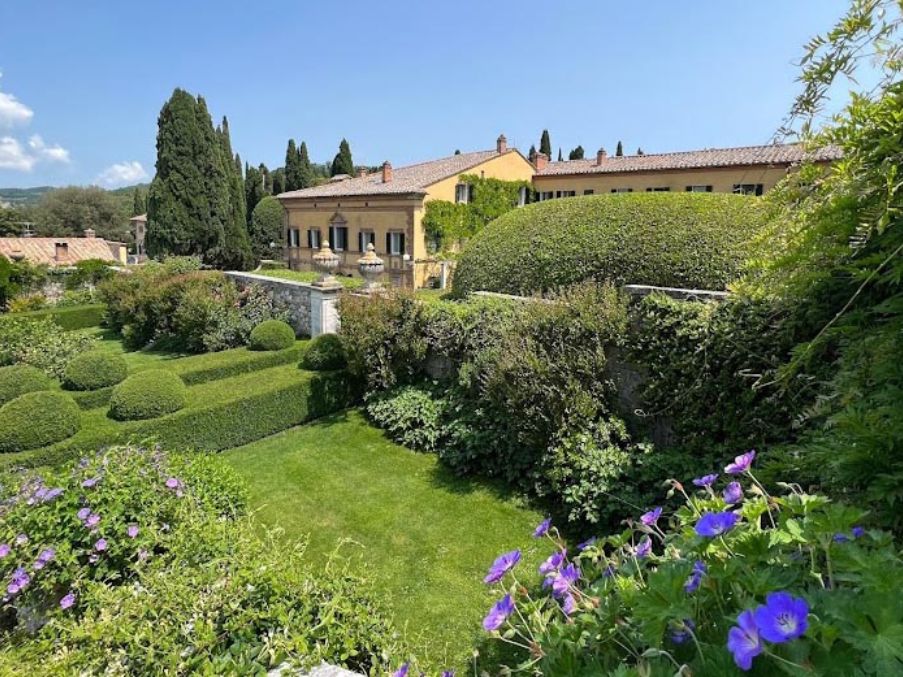
La Foce represents perhaps the most complete expression of Pinsent’s ideals. Starting in the 1920s, he transformed the villa’s agricultural terrain into a series of descending terraces, each designed with geometric precision and framed by stone walls, cypress trees, and boxwood hedges. The garden is conceived as an architectural extension of the villa itself — not an ornamental appendage, but a spatial narrative in its own right, leading the eye outward to the infinite curves of the surrounding hills.
What distinguishes Pinsent’s work is his masterful sense of scale. At La Foce, grand axial alignments coexist with intimate garden rooms; theatrical perspectives open onto vast rural vistas, while shaded corners offer moments of quiet introspection. His compositions are never merely decorative — they are measured orchestrations of light, shadow, texture, and form.
Pinsent’s work in Florence and across Tuscany — including interventions at Villa Le Balze, Villa Capponi, and I Tatti — shares this same clarity and restraint. Yet at La Foce, perhaps more than anywhere else, his vision becomes inseparable from the landscape itself. It is a place where design becomes poetry — structured, serene, and profoundly rooted in place.